
模板案例
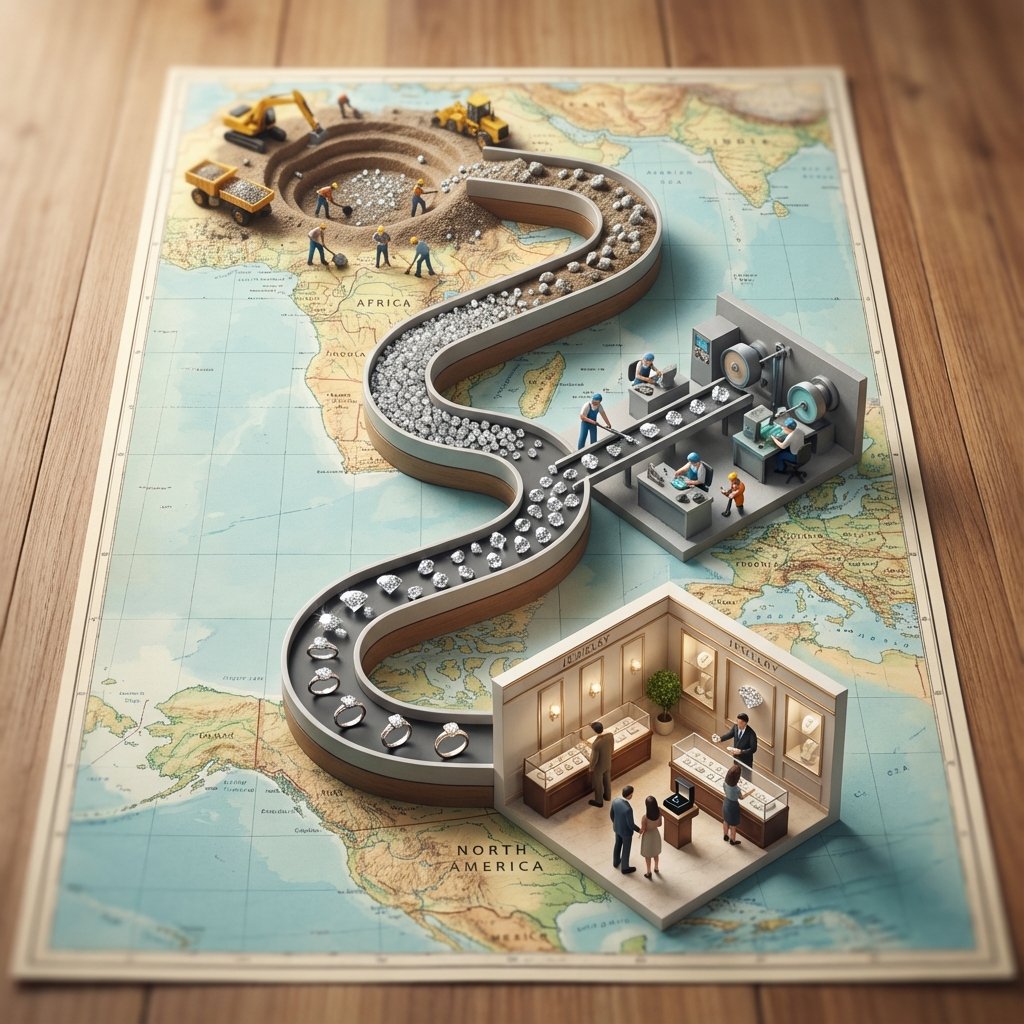
创意微缩摄影:世界地图上的商品奇幻漂流
提示词
中文提示词
<instruction> 1. 分析输入变量: 输入 A 是一种全球性商品,具有独特的生产生命周期(例如,咖啡、巧克力/可可、葡萄酒、牛仔布/棉花)。 将生命周期分解为 3 个不同的阶段: 阶段 1(起源):农业来源(例如,咖啡种植园、可可树)。 阶段 2(加工):工业转化(例如,烘焙厂、发酵罐)。 阶段 3(目的地):零售体验(例如,一家时尚咖啡馆、一家巧克力店)。 2. 容器(地图桌): 目标:一个“从种子到货架”的流程图立体模型。 底座:一张铺平在木制餐桌上的大型复古世界地图(蓝色海洋,柔和色调的大陆)。 主干:一条凸起的、蜿蜒的 S 形滑槽/传送带穿过图像中心,物理连接三个阶段。 流程:滑槽中装满了产品,产品在移动过程中视觉上发生变化(例如,顶部是红色咖啡樱桃 → 中间是棕色烘焙咖啡豆 → 底部是精细研磨的粉末)。 3. 小场景(站点): 在 S 曲线的每个关键点构建一个 3D 立体模型“岛屿”: 顶部站点(起源):地图上的一小块地形(例如,南美洲)。详细的农作物、树木和正在收获原材料的农民。 中部站点(加工):地图上紧凑的工业设施(例如,欧洲/美国)。金属烘焙机、筒仓、烟囱和工厂工人。 底部站点(目的地):一个建筑剖面盒。前壁被移除,露出商店内部(例如,浓缩咖啡机、坐在桌旁的小顾客、正在服务的咖啡师)。 4. 叙事比例(工人): 比例:1:87(HO 比例)微缩人物。 动作:人物不仅仅是站立;他们正在积极地将产品从“站点”移动到“滑槽”中(例如,农民将一篮篮樱桃倒入溪流中,工厂工人铲运咖啡豆)。 5. 灯光与氛围: 摄像机角度:高角度透视(45-60 度)。俯视桌子的长度。 灯光:自然日光。明亮、欢快、均匀。阴影柔和地落在地图上。 景深:移轴效果。桌子的顶部和底部边缘略微模糊,使模型看起来很小。 输出:一张图片,垂直长宽比(4:5),微缩摄影,教育立体模型美学。 </instruction>
英文提示词
<instruction> 1. Analyze Input Variable: Input A is a Global Commodity with a distinct production lifecycle (e.g., Coffee, Chocolate/Cocoa, Wine, Denim/Cotton). Deconstruct the lifecycle into 3 Distinct Stages : Stage 1 (The Origin): The agricultural source (e.g., Coffee Plantation, Cacao Trees). Stage 2 (The Process): The industrial transformation (e.g., Roasting Plant, Fermentation Vats). Stage 3 (The Destination): The retail experience (e.g., A Hipster Cafe, A Chocolatier Shop). 2. Container (The Map Table): Goal: A "Seed to Shelf" Flowchart Diorama. The Base: A large, vintage World Map (blue oceans, pastel continents) laid flat on a wooden dining table. The Spine: A raised, winding S-Shaped Chute/Conveyor snakes through the center of the image, physically connecting the three stages. The Flow: The chute is filled with the product, which visually transforms as it moves down the path (e.g., Red Coffee Cherries at the top → → Brown Roasted Beans in the middle → → Fine Ground Powder at the bottom). 3. The Vignettes (The Stations): Construct a 3D diorama "Island" at each key point of the S-curve: Top Station (Origin): A square patch of terrain sitting on the map (e.g., South America). Detailed crops, trees, and farmers harvesting the raw material. Middle Station (Process): A compact industrial facility sitting on the map (e.g., Europe/USA). Metallic roasters, silos, smoke stacks, and factory workers. Bottom Station (Destination): An architectural Cutaway Box. The front wall is removed to reveal the interior of a shop (e.g., Espresso machines, tiny customers sitting at tables, baristas serving). 4. The Narrative Scale (The Workers): Scale: 1:87 (HO Scale) miniature figures. Action: The figures are not just standing; they are actively moving the product from the "Station" into the "Chute" (e.g., Farmers dumping baskets of cherries into the stream, Factory workers shoveling beans). 5. Lighting & Atmosphere: Camera Angle: High-Angle Perspective (45-60 degrees). Looking down the length of the table. Lighting: Natural Daylight. Bright, cheerful, and even. Shadows fall softly on the map. Depth of Field: Tilt-Shift effect. The top and bottom edges of the table are slightly blurred to make the models look tiny. Output: ONE image, Vertical Aspect Ratio (4:5), Miniature Photography, Educational Diorama aesthetic. </instruction>
×
微信扫码分享
打开微信,使用“扫一扫”即可分享