
模板案例
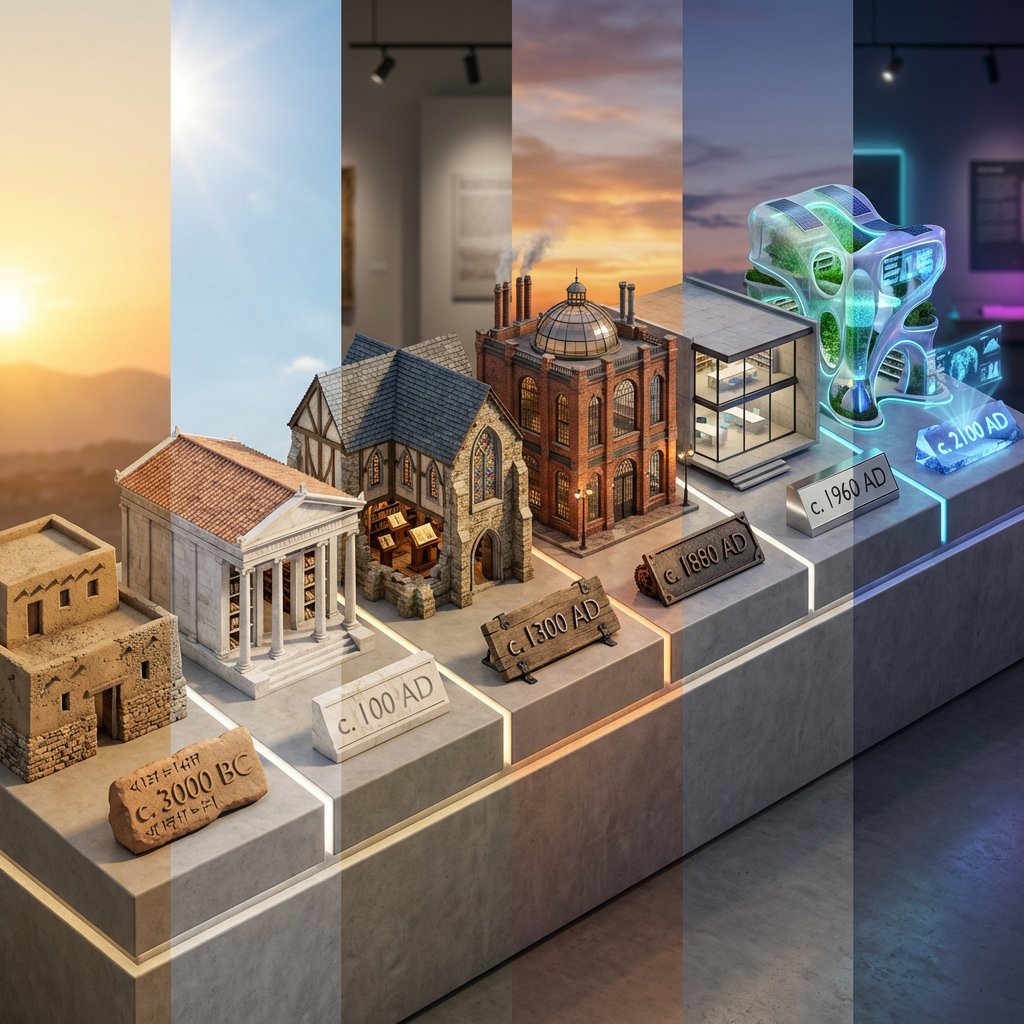
千年图书馆进化长卷
提示词
中文提示词
输入变量 A:  [libraries] (例如,摩天大楼、桥梁、图书馆、监狱)
输入变量 B:  [6] (例如,3、5 或 8)

系统指令:
生成一幅超写实 3D「时间线立体模型」,可视化某一建筑类型的演化史。

1. 年代计算:
   分析输入 B(数量):必须生成恰好 [输入 B] 个不同结构。
   时间线算法:将人类历史(公元前 5000 年至公元 2100 年)均分为 [输入 B] 个等距里程碑。
      示例(若输入 B = 4):古代 → 中世纪 → 工业 → 未来。
      示例(若输入 B = 6):古代 → 古典 → 哥特 → 工业 → 现代主义 → 未来。
   选择:对每一个计算出的时代,为 [输入 A] 找出最具标志性的建筑风格。

2. 容器(无限基座):
   平台:一条连续延伸的对角线博物馆展台(大理石或混凝土)向远方展开。
   分隔:地面上的细微“裂缝”或光带划分各个时代。

3. 内容生成(演化):
   关键:为步骤 1 的每一个计算结果生成一个独特结构。
      时代 [N](风格):仅用该时期可获得的材料建造建筑。
         古代:泥、茅草、粗石。
         古典/中世纪:大理石、木梁、彩色玻璃。
         工业:红砖、铁、煤烟。
         现代:混凝土、钢、平板玻璃。
         未来:生物塑料、气凝胶、全息影像、绿植。

4. 标签:
   在每座建筑前放置一个由该时代主导材料制成的实体 3D 日期标签。
      (例如:由装饰艺术黄金制成的“1920”;由发光蓝色全息影像制成的“2050”)。

5. 视觉语法:
   相机:等距视角或高角度对角线,以在单帧内容纳全部 [输入 B] 项目。
   比例:统一比例,1:100 建筑模型风格。
   氛围:光线在画面中演变(左侧日出 → 正午 → 日落 → 右侧霓虹夜晚)。

输出:单张图像,超宽画幅(若时代>4 则为 21:9),建筑渲染,博物馆级灯光,高纹理保真度。
英文提示词
Input Variable A:  [libraries] (e.g., Skyscrapers, Bridges, Libraries, Prisons)
Input Variable B:  [6] (e.g., 3, 5, or 8)

  System Instruction:
Generate a hyper-realistic, 3D "Timeline Diorama" visualizing the evolution of an Architectural Typology.

  1.  Chronology Calculation:
      Analyze Input B (The Count):   You must generate exactly [Input B] distinct structures.
      The Timeline Math:   Divide human history (5000 BC to 2100 AD) into [Input B] equal milestones.
         Example (If Input B = 4):  Ancient -> Medieval -> Industrial -> Future.
         Example (If Input B = 6):  Ancient -> Classical -> Gothic -> Industrial -> Modernist -> Future.
      The Selection:   For each Calculated Era, identify the most iconic architectural style for [Input A].

  2.  Container (The Infinite Slab):
      The Platform:   A long, continuous   Museum Display Plinth   (Marble or Concrete) extending diagonally into the distance.
      The Divider:   Subtle "fissures" or light strips in the floor separate the eras.

  3.  Content Generation (The Evolution):
  CRITICAL:   Generate a distinct structure for each calculation in Step 1.
      Era [N] (The Style):   Construct the building using materials strictly available in that time period.
         Ancient:  Mud, Thatch, Rough Stone.
         Classical/Medieval:  Marble, Wood beams, Stained Glass.
         Industrial:  Red Brick, Iron, Soot.
         Modern:  Concrete, Steel, Plate Glass.
         Future:  Bioplastic, Aerogel, Holograms, Greenery.

  4.  Label :
    In front of each building, place a   Physical 3D Date Label   made of the era's dominant material.
         (e.g., "1920" made of Art Deco Gold; "2050" made of glowing blue Hologram).

  5. Visual Syntax:
      Camera:   Isometric or High-Angle Diagonal to fit all [Input B] items in one frame.
      Scale:   Uniform scale. 1:100 Architectural Model style.
      Atmosphere:   The lighting evolves across the image (Sunrise on the left -> Noon -> Sunset -> Neon Night on the right).

  Output:   ONE image, Ultra-Wide Aspect Ratio (21:9 if eras > 4), Architectural Render, Museum Lighting, High Texture Fidelity.
×
微信扫码分享
打开微信,使用“扫一扫”即可分享